On Monday, I gave a series of four lectures on slavery and race in New Bedford and Fall River, Mass.

Local newspaper stories about the talks have appeared in the Fall River Herald News (“Descendant of slave trader talks at BCC“) and in the New Bedford Standard-Times (“19th century tycoon’s descendants tell of North’s role in slavery“).

Click here to read the rest of this entry

Will Moredock, in an opinion piece in the Charleston City Paper this week, revisits the effort of the South Carolina State Ports Authority to systematically remove all references to slavery and blacks from its maritime history of Charleston and South Carolina.

Click here to read the rest of this entry

Traces of the Trade: A Story from the Deep North will be re-broadcast in the Boston area on Sunday, February 1 at 9:00pm on WGBX (known locally as PBS channel 44).

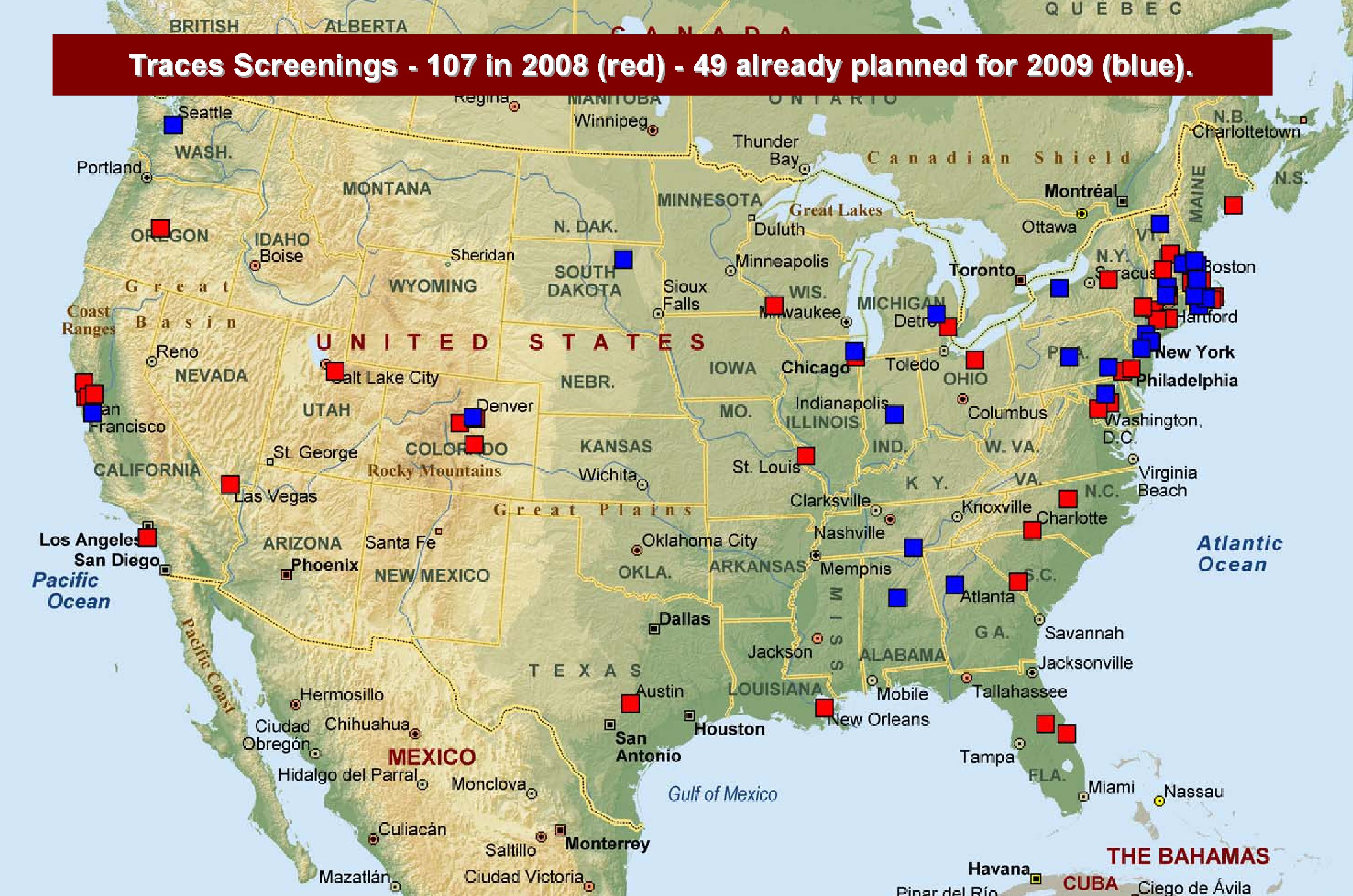
John Bell of Ebb Pod Productions has created a map of the United States, showing the locations of selected past and future screenings of Traces of the Trade:

Map of Traces of the Trade screenings

Click here to read the rest of this entry

Earlier this year, we saw the launch of Voyages, an innovative new web site designed to make available to the public the latest incarnation of the invaluable Trans-Atlantic Slave Trade Database.

On December 5 and 6, Emory University will host an international group of scholars for a conference to celebrate the launch of Voyages, to commemorate the bicentennial of the abolition of the trade, and to present research on the slave trade.

Those of us who have worked on the history of the DeWolf family and the slave trade in Rhode Island for the documentary Traces of the Trade, and the book Inheriting the Trade, found earlier versions of the trans-Atlantic slave trade database, including the original 1999 database as well as the more recently updated database and the beta version of the Voyages web site, to be invaluable as research tools.

Click here to read the rest of this entry

The U.N. General Assembly, on the occasion of the 200th anniversary of the abolition of the transatlantic slave trade, has approved a resolution calling for the erection of a permanent memorial in New York to commemorate the slave trade and its legacy.

The resolution stresses the importance of raising awareness of the history and “lasting consequences” of the slave trade, and calls on all member nations to develop school curricula and other educational programs to teach “the lessons, history and consequences of slavery and the slave trade.”

Representatives at the debate on the resolution also raised the issue of an apology, called for reparations for slavery and the slave trade, and stated explicitly that the foundation of much of the world’s wealth and poverty lies in the history of slavery.

Click here to read the rest of this entry

I’ve delayed posting about this morning’s press coverage of Traces of the Trade, as we prepare for the start of national broadcast this evening on PBS.

However, several members of the Traces family have asked me for the latest update, so I hope everyone else will bear with me—or simply move along—as I review what the press is saying about the documentary this morning.

I’ll start with an article in this morning’s Boston Globe by Vanessa Jones, about the bicentennial of the abolition of the slave trade. Vanessa and I had spoken a couple of weeks ago, about the reasons for the nation’s lack of awareness about the bicentennial, and she has done an excellent job of reporting on those who have been involved in commemorating the occasion, as well as interviewing scholars who can address the reasons for this historical amnesia.

Click here to read the rest of this entry

Few in the United States have taken the opportunity to acknowledge, much less to commemorate, the 200th anniversary of the abolition of the U.S. slave trade in 1808.

For this reason, I was pleased to see that Senator John McCain gave a campaign speech on Wednesday in Michigan, in which he took the importance of the British and U.S. abolition of the trade as the jumping-off point for a focus on modern sex trafficking, child pornography, and other contemporary evils:

… the achievement of both countries in terminating the international slave trade and setting into motion the titanic and bloody struggle to close a shameful chapter in the history of our country [i.e., slavery itself] should be remembered as a turning point in mankind’s long and fitful progress toward a more just world.

Click here to read the rest of this entry

Since last year, there has been a series of legislative developments, at the state and national levels, related to the legacy of slavery and the slave trade. I’ve blogged about each of these efforts separately in the past, but in this entry, I want to offer a quick overview of the various legislative proposals and their current status.

Click here to read the rest of this entry

The Nation has just posted an article, “Tracing Slavery’s Past,” which is centered around Traces of the Trade.

The story (web-only) is by Te-Ping Chen, who, as I’ve noted before, has previously written about Traces in the Providence Phoenix.

Click here to read the rest of this entry

« Previous PageNext Page »